Record the goal and initial condition
Describe the incoming parts: material, geometry, existing contamination and machining condition. Record how a suitable result is recognised. “Clean” is understandable in everyday use, but too vague for a reproducible trial. The assessment can cover different aspects; its criteria must match your operational needs.
Treat loading as a process parameter
Document the number and position of the parts. A densely loaded carrier may behave differently from a partly loaded one. Contact points and concealed areas therefore belong in the assessment. The loading should not be changed silently during the trial, otherwise results become hard to compare.
Assess the carrier when loaded
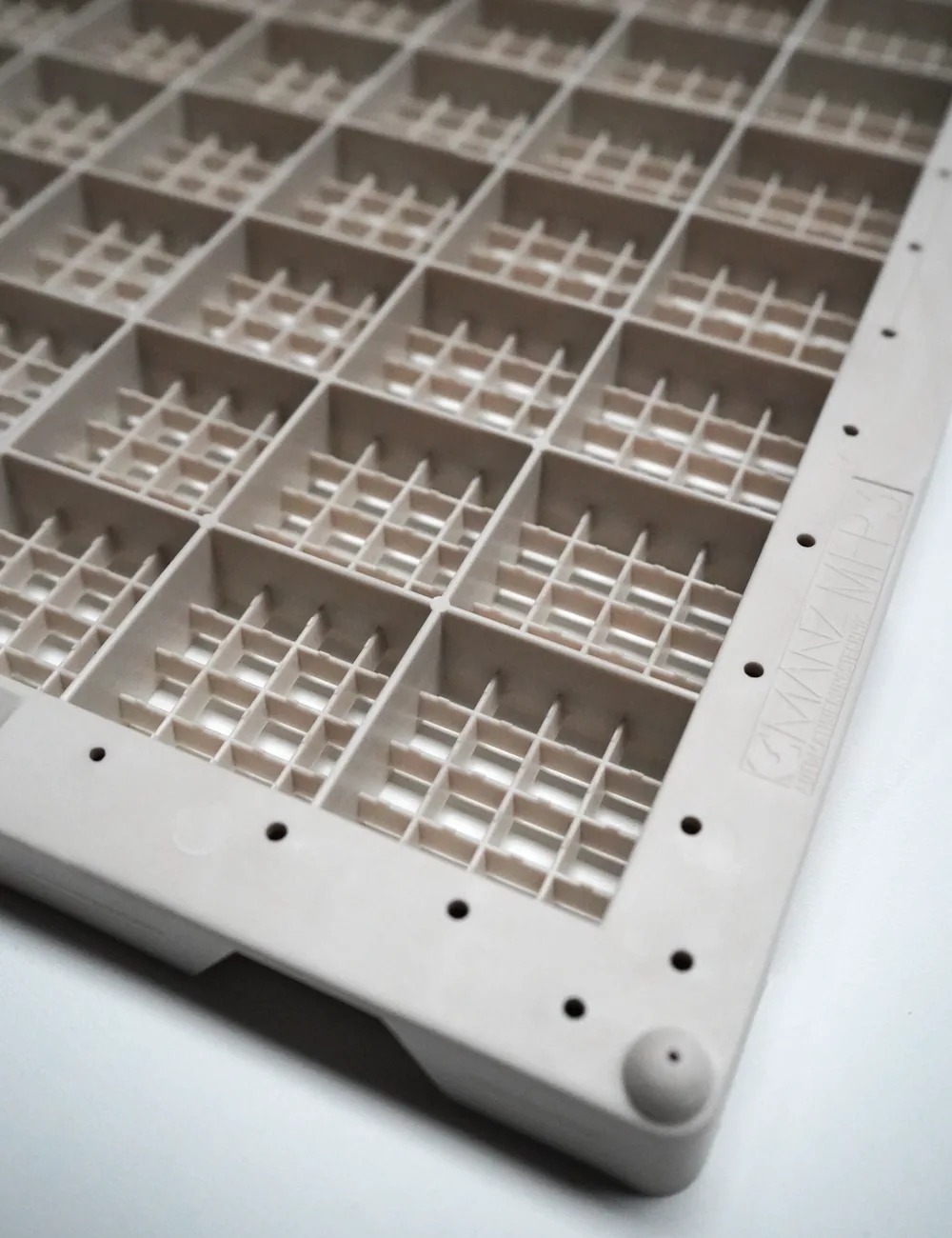
Look at the points where the part rests and the paths through which liquid can flow in and out. Note possible accumulations in recesses or between adjacent surfaces. What effect these observations actually have is shown by the test in the intended process. An open structure alone guarantees neither the result nor suitability for every machine.
Record process data completely
The report should include the medium, product name, concentration, temperature, duration and process. Where applicable, add movement, rinsing and subsequent drying. Use clear designations instead of “standard programme”. This keeps visible later which conditions were assessed with the carrier.
The trial ends after removal
Don’t just check the part immediately after the cleaning step. Also look at drying, subsequent handling and possible recontamination. Record any changes to the carrier as well. Only the complete process shows whether the solution can be used for the next process step.
Typical pitfalls
- Comparing trials with different loading.
- Not recording the actual cleaning programme.
- Assessing only visually although other criteria apply.
- Adopting a material statement from another application without checking.
- Mixing approved carriers with carriers not yet assessed.
A small, meaningful series of trials
Start with a clear question and change only one relevant parameter per comparison if possible. This makes observations easier to attribute. Scope and approval criteria are set by the responsible process planning. Technical guidelines from the German industrial parts cleaning association (FiT) can support this planning; they do not replace an application-specific assessment.
More on drying · Materials and media · Download the report template