Two interfaces instead of one
The first interface lies between machine and pallet: how is the carrier guided, positioned and held? The second lies between pallet and part: how does the workpiece lie, how much can its position vary and where may it be gripped? A matching outer format answers only part of these questions.
Preparing manual processes
For manual loading, visibility and accessibility are important. An operator must be able to see which pockets are occupied and how a part is to be placed. Try out the process at the intended workstation, taking gloves, lighting and the actual table or machine height into account. Observations from this trial help to write clear work instructions.
Coordinating automated removal
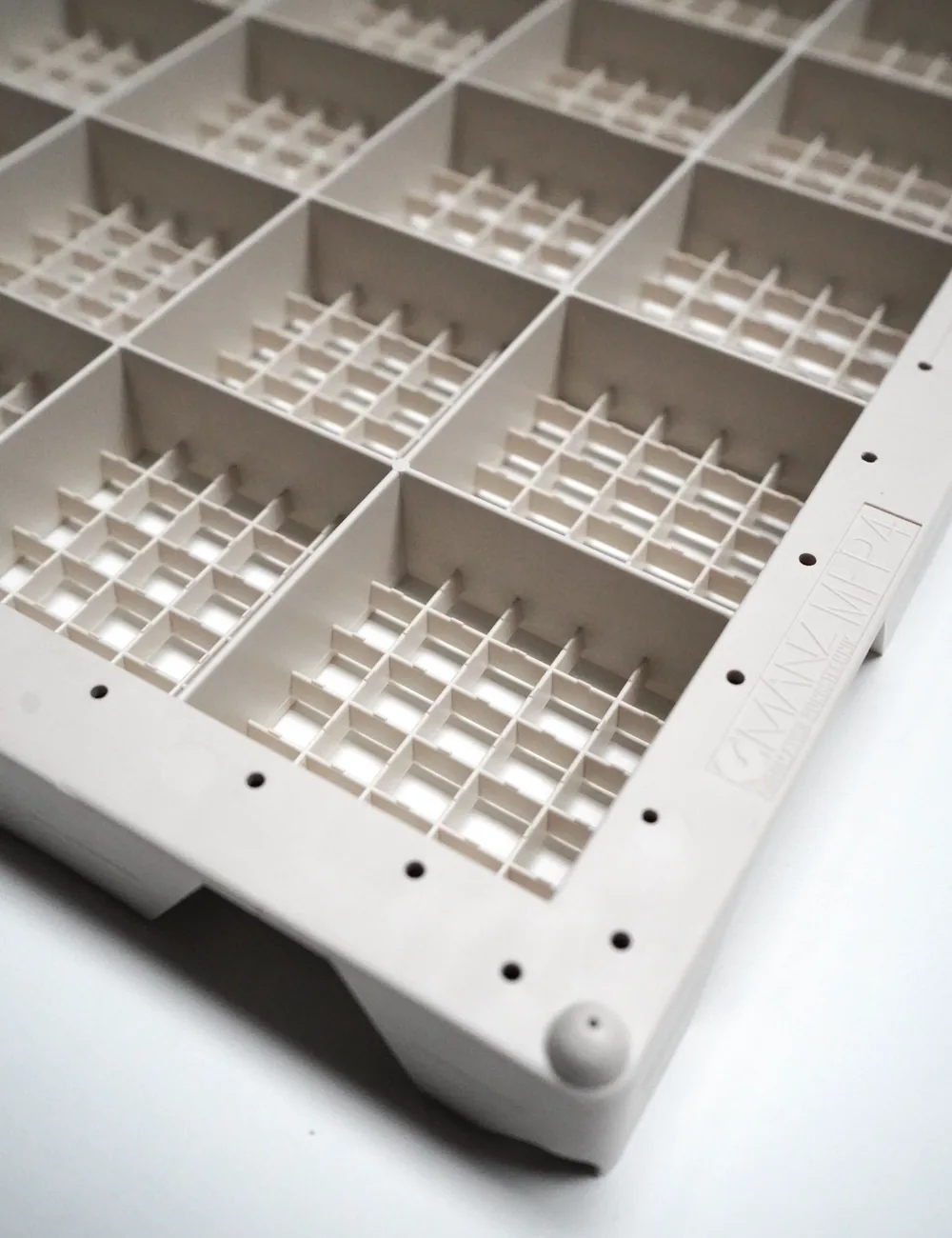
For robot handling and pick-and-place, first describe the accuracy required. A gripper needs suitable contact surfaces and sufficient clearance. If a camera is involved, lighting, view of the part and possible contamination belong in the trial. The fixed grid of MFP pallets simplifies programming: every pocket position can be calculated from the grid pitch and the pallet position. A short trial with sample pallets shows whether gripper and part work together in your cell.
Don’t forget special cases
A real process also includes empty pockets, partial loading and interruptions. Define how the process continues if a part is not picked. A controlled restart is part of the planning. The pallet alone does not control these events; it is one component of the overall system.
For your technical enquiry
Useful information includes machine manufacturer and type, a drawing of the pallet holder, the part drawing and details of the gripper. If MFP pallets are already in use, give us the existing article number. This lets us focus on the interfaces that are actually open.
More on automation · Compare pallets · Describe your project
Machine loading with grid pallets
Grid pallets are the classic basis for automated loading of grinding, measuring and assembly machines. With the MFP system, high-performance vision systems detect the parts in the grid and feed them automatically into the machining process. The pallet provides the defined position – camera, gripper and machine control come with your machine or your integrator. We are happy to coordinate directly with them.