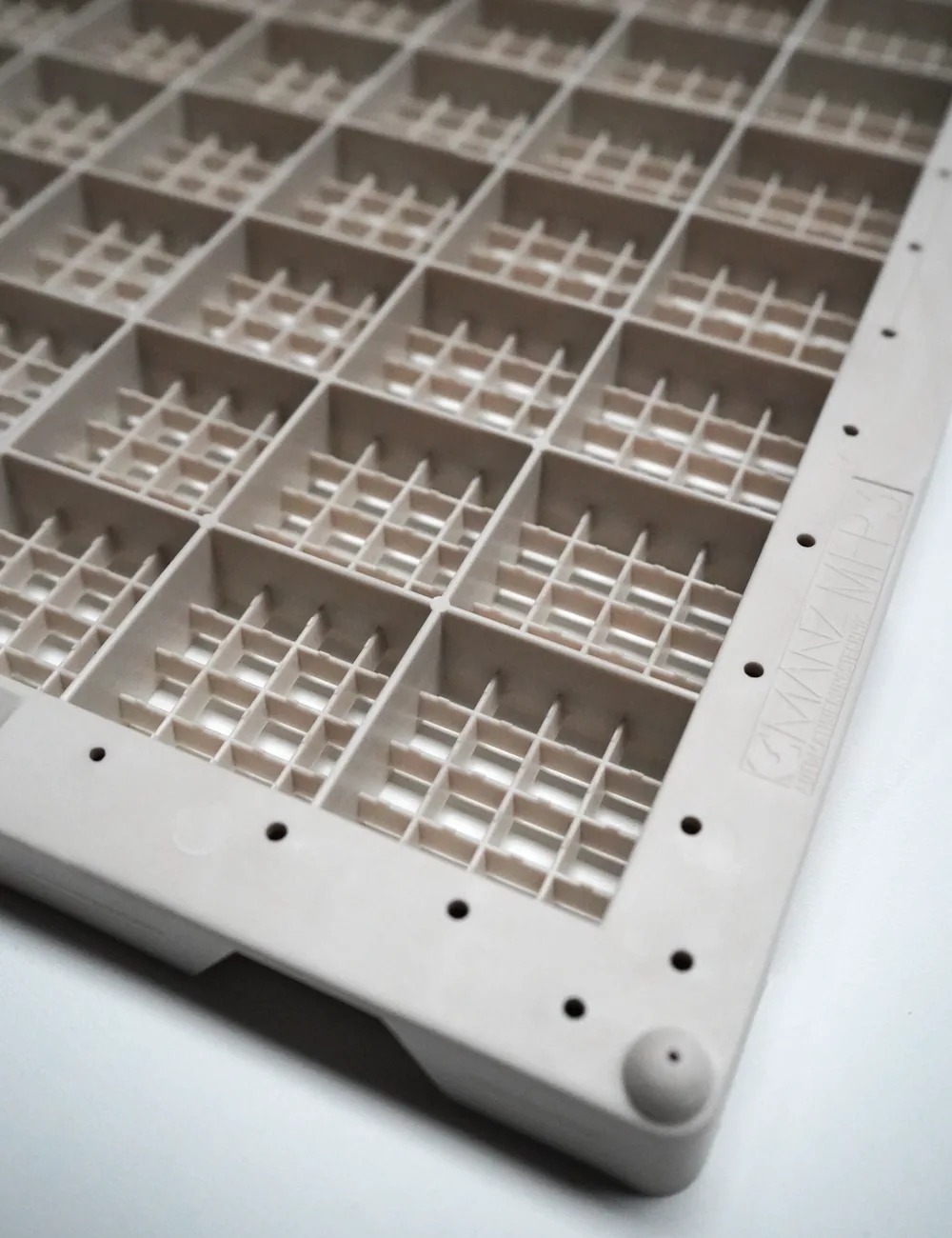
One footprint for rack, trolley and stack
All five MFP models measure 383 × 281.3 mm. Whether a fine grid for 408 small parts or a large compartment for 24 workpieces – the pallets fit the same shelf compartments, the same trolleys and the same standardised stacking systems. This simplifies storage planning when different parts are moved in the same plant. The height differs: 14 mm for MFP 0 to 2, 18 mm for MFP 3 and 26 mm for MFP 4.
Think storage location and carrier together
Start with where the pallet actually stands: on a workbench, on a shelf or on a transport trolley. The support must suit the approved use. Consider accessibility, orientation and labelling. An empty return pallet needs a defined place, too.
Describe the handover point
Define when an order counts as provided and who takes it over. A pallet can arrange parts, but it does not replace status information. Especially with similar-looking variants, the link between order, pallet and load is important. Use an identification system agreed within your company.
Test transport under real conditions
Don’t just assess the carrier at rest. Pushing a trolley, setting down at a station and lifting create different situations. The trial should show whether parts change position, touch sensitive areas or become harder to remove. MFP pallets are stackable; how high you can stack loaded pallets depends on part weight and overhang – we agree this with you.
Organise clean and uncleaned stock
If parts are cleaned, clean stock and returning carriers should be clearly assigned in the process. Whether separate places, labels or additional protective measures are needed depends on your process. A clearly visible rule makes daily implementation easier.
Enquiry data for the right selection
Tell us the part dimensions, quantity per order, the desired storage and means of transport. Add existing shelf or machine dimensions if they limit the selection. For quantity planning, consider the whole cycle including return and the necessary reserve.
Calculate carrier quantity · Read about transport planning · Enquire about MFP