Distinguish empty and loaded
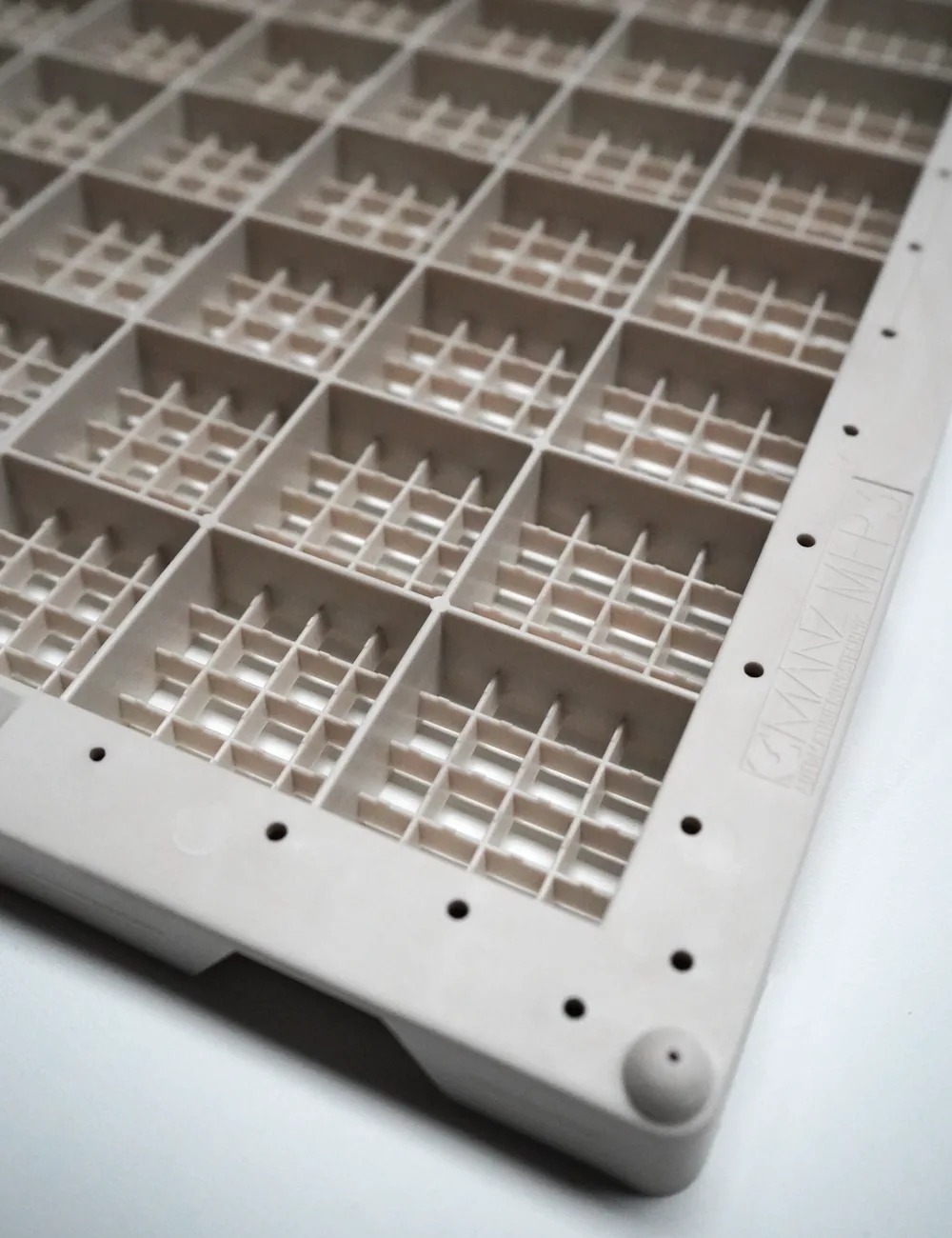
An empty carrier is in a different state from a loaded pallet. Weight, centre of gravity and possible overhangs change. That is why empty transport and parts transport should be described separately. The fact that empty pallets can be placed on top of each other is not yet an approval for a loaded stack.
Consider support and load path
Record what the pallet stands on and how a load is taken up. A flat support can differ from holding on individual rails. Permissible loads and stacking conditions require current data for the specific version. Your own calculations based only on dimensions or material names do not replace this data.
Check part clearance
Protruding parts must not be loaded unnoticed when another carrier is placed on top. Look at the highest point of the whole load. Also consider whether parts can stand up or jam during transport. A check of the empty pallet alone does not capture such situations.
Walk the transport route
Walk the actual route with the people involved. Where is the pallet lifted? Where is a trolley braked? Which handovers and set-down areas are there? Also note bottlenecks and temporary storage places. The trial should reflect the intended workflow; a general statement about “transportability” is too vague for this.
Create a clear test plan
| Situation | Observation |
|---|---|
| Loading | Support and accessibility of the parts |
| Lifting | Handling and position of the load |
| Transport | Shifting, tipping and contact |
| Setting down | Support, stability and removal |
| Return | Condition and clear assignment |
Define responsibilities
Define who checks carriers before reuse and where conspicuous pallets go. Describe permissible storage places and means of transport in your work instructions. Manufacturer information and the workplace assessment must be taken into account. This guide does not define a permissible stacking height or load capacity for MFP.
Recognise changes
A heavier part variant, a different means of transport or a new support can change the previous assessment. Record such changes and check the affected points specifically. That is clearer than lumping together experience from different processes under the same model designation.
Component protection · Plan carrier quantity · Request technical data
MFP flat pallets are stackable
The MFP system works with standardised stacking systems, and the flat pallets are stackable with the Manz pin pallet. Because all models share the same footprint, different models can also be stacked in the same system. How high you can stack loaded pallets depends on part weight, overhang and transport route – we agree this with you.