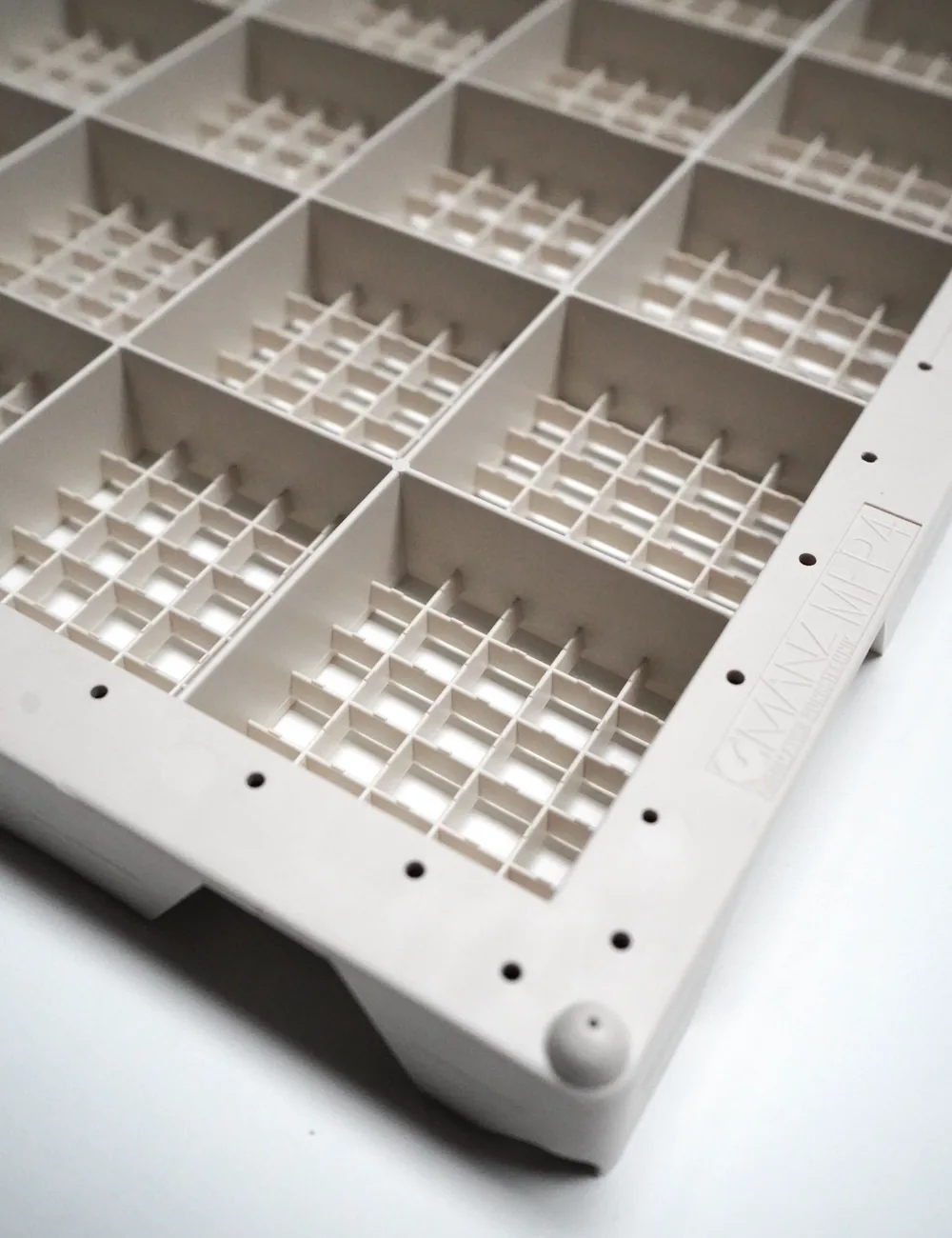
Before the trial: define goal and scope
Note what the trial is meant to answer. Is it first about geometry, manual removal or already a complete process? Name the assessment criteria and the people responsible. Scope, repetitions and acceptance limits depend on the application; there is no blanket figure for them here.
Label the sample clearly
Document model, article number and known product revision. Also record the drawing or revision of the part. Photos of the chosen position make things easier to trace later. If several variants are tested, they should stay clearly separated and assigned.
Choose representative parts
Use parts that reflect the later application sensibly. For a part family, consider the relevant borderline cases. A particularly uncritical single part can give too favourable a picture. Note differences between the sample and the later series part, for example in surface or machining condition.
Proceed in a sensible order
Start with placing and removal. Then add transport, machine handovers and further relevant steps. Document not only failures but also the conditions of a positive result. This shows which combination worked. Do not change several parameters at once unnoticed during the comparison.
Separate observation and assessment
“Part has rotated by about a quarter turn” is an observation. “Unsuitable for automated picking” is an assessment against a requirement. This separation helps to discuss results objectively. It prevents an impression without reference to the process from being adopted as a general verdict.
Record approval and open points
At the end it should be clear which conditions were assessed, who approves the result and what remains open. A carrier may, for example, be suitable for manual storage while its cleaning is still unresolved. Such a limited assessment is more precise than an undifferentiated “sample OK”.
Reassess specifically after changes
If part, version, medium, holder or process change, check the affected evidence. Not every piece of information has to be recreated. A cleanly documented initial assessment shows which points really need to be looked at again.
Download the report template · Selection guide · Request samples