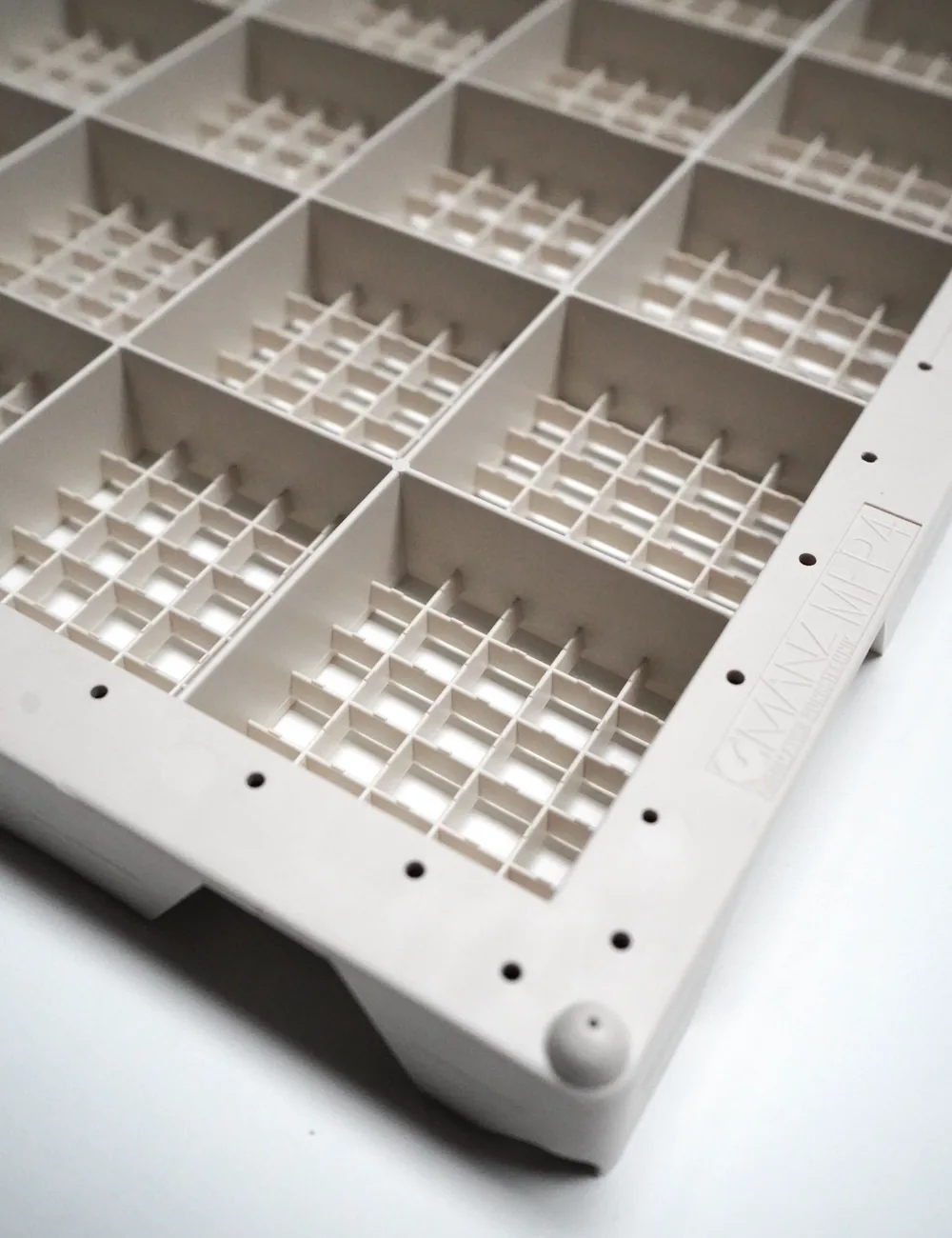
Distinguish provision from shipping packaging
A pallet for in-house feeding is not automatically complete transport packaging for shipping. Shipping may involve additional requirements for fixing, protection, closure and external loads. So describe whether the MFP pallet is used only up to the packing station or beyond.
Orderly handover to the station
Define which information travels with the parts: article, batch, inspection status and target quantity. Also decide where a partly loaded pallet is placed. A clear rule for partial quantities prevents the visible number of pockets from being confused with an actually inspected quantity.
Removal as the central check
For manual packing, the parts should be easy to reach. For automated packing, the gripper needs a coordinated position and access. Check whether the part can tip or rotate during feeding. A short trial at the packing station quickly shows whether position and access are right.
Organise remaining quantities and returns
When an order ends, remaining parts must stay clearly assigned. It should also be clear how empty pallets are checked and returned. These steps are part of material flow planning and influence how many carriers are needed in circulation.
Start with a little information
Send us information about the part, its removal and the packaging process. For existing machines, photos of the feed and the current article number help. The number of pallets needed results from loading, throughput and cycle – not just from the size of a single order.
Plan packaging handovers · Organise identification · Send an enquiry